
Solar + EV Charging Integration Guide
Learn how to integrate solar power with EV charging systems. This guide explains system design, components, energy flow, and installation considerations.
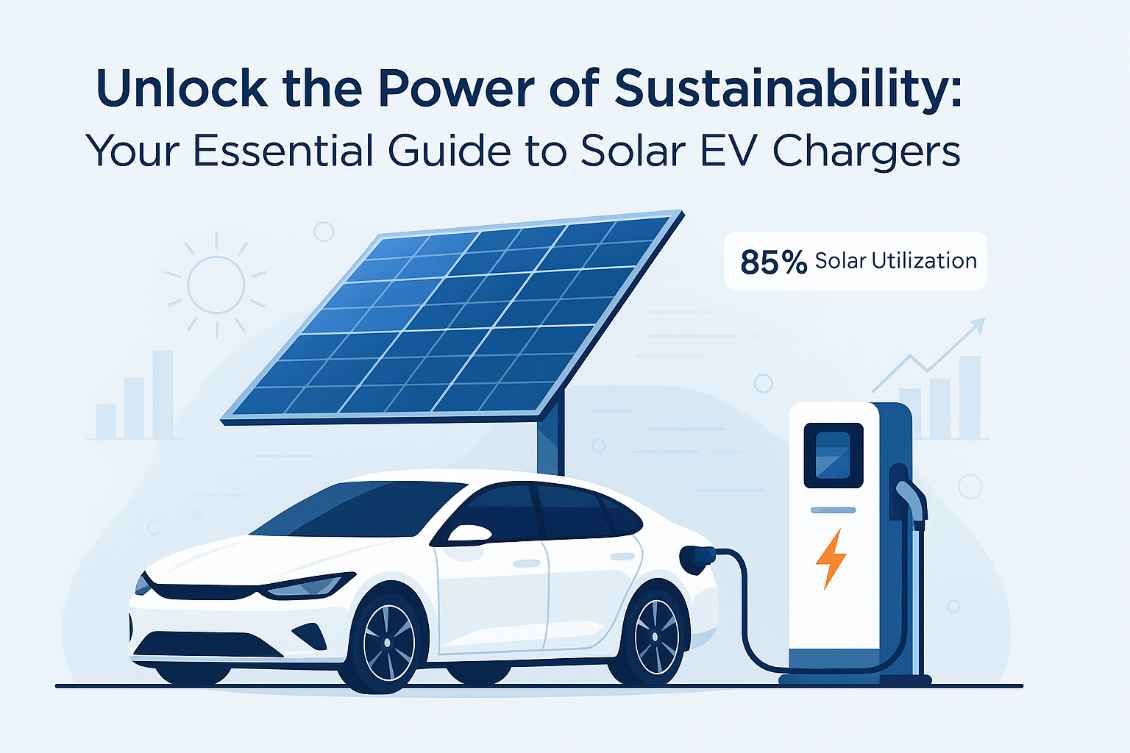
Solar + EV Charging Integration Guide: How to Power Your EV with Solar Energy
As EV adoption increases, more homeowners and commercial users are asking the same practical question: if a building already has solar, can that energy be used directly for EV charging?
In most cases, yes. But from a system design standpoint, “solar-powered EV charging” is not simply a matter of connecting an EV charger to a solar inverter. Whether the system performs well depends on generation capacity, load profile, inverter configuration, charger power, and how energy is managed across the site.
A well-designed solar + EV charging system can reduce grid dependence, improve self-consumption, and make better use of daytime solar production. A poorly designed one may still work, but it will not necessarily deliver the expected savings or energy optimization.
This guide explains how solar and EV charging are integrated in practice, what components are involved, and what engineers, installers, and project buyers should evaluate before implementation.
1. Why Integrate Solar with EV Charging?
From an energy-use perspective, EV charging is one of the most logical loads to pair with solar generation.
An electric vehicle consumes a meaningful amount of electricity on a daily basis. If that energy is drawn entirely from the grid, operating cost depends directly on local electricity tariffs. If part of that charging demand can be supplied by on-site solar, the economics improve immediately.
The main benefits of solar + EV integration are straightforward:
- lower electricity cost
- improved use of on-site solar generation
- reduced grid import
- lower carbon intensity of vehicle charging
- better overall energy independence
For residential users, this is often about reducing the cost of daily commuting. For commercial users, it may also be about load management, ESG targets, or improving the return on investment of an existing solar installation.
2. Basic System Architecture
A solar-integrated EV charging system is not a separate energy source. It is part of the building electrical system, with the EV charger acting as a controllable load.
A typical configuration includes:
- solar PV modules
- inverter
- main distribution system
- EV charger
- optional battery storage
- optional energy management controller
In simplified form, the energy path looks like this:
Solar panels → inverter → building electrical system → EV charger → EV battery
Depending on system conditions, the EV charger may draw power from:
- real-time solar generation
- battery storage
- grid supply
- a combination of the above
The key point is that the charger itself usually does not “know” whether the electricity is solar or grid. What matters is how the site energy system is configured and prioritized.
3. Core Components in a Solar + EV Charging System
Solar Panels
The solar array is the generation source. Its job is to convert solar irradiance into DC power that can be used by the site after inversion.
For residential projects, system size often falls somewhere in the 5 kW to 15 kW range, but the correct size depends on:
- total household load
- EV charging demand
- available roof area
- local solar yield
- export policy and self-consumption strategy
If the EV is a major part of the load profile, the array should be sized with charging demand in mind, not only normal household consumption.
Inverter
The inverter converts DC power from the PV array into AC power for use within the building. In integrated systems, the inverter is also a key point of energy coordination.
Depending on the design, the inverter may be:
- standard grid-tied inverter
- hybrid inverter
- inverter with battery integration capability
A hybrid inverter is often preferred where battery storage is planned, because it can manage energy flow between PV generation, storage, building load, and grid interaction more effectively.
EV Charger
The EV charger is the controlled end-use device. In a home or small commercial setting, typical AC charging levels include:
- 3.7 kW
- 7 kW
- 11 kW
The appropriate charger rating depends on:
- available single-phase or three-phase supply
- vehicle charging capability
- daily charging requirement
- desired charging time window
In Europe, Type 2 is the standard AC connector in most cases.
Battery Storage
Battery storage is optional, but in many integrated systems it improves overall flexibility.
Without storage, EV charging from solar works best when the vehicle is parked during daytime generation hours. With storage, excess solar generated during the day can be shifted to later charging periods, including evening use.
From a system engineering standpoint, storage helps when:
- EV charging demand occurs outside solar production hours
- the site wants to reduce grid import further
- peak load management is important
- self-consumption optimization is a project goal
4. How Energy Actually Flows
In real operation, energy flow depends on time of day, solar output, household load, EV charging demand, and system controls.
During strong daytime generation, a typical sequence may be:
Solar panels → inverter → house loads + EV charger
If PV output exceeds building demand, the excess may:
- charge the battery
- be exported to the grid
- continue supplying EV charging if the car is connected
At night or during low solar generation, EV charging may instead be supplied by:
- stored battery energy
- grid import
- both, depending on control strategy
The important design point is that solar integration is not static. It is a dynamic load-balancing problem.
5. Why Smart Energy Management Matters
Without control logic, an EV charger will simply draw the power it is set to draw, regardless of whether solar production is high or low. That means the site may still import significant grid energy even when a solar system is installed.
This is why energy management becomes important.
A properly configured control system can:
- prioritize solar generation for EV charging
- reduce charger output when solar production is low
- delay charging until solar output increases
- coordinate battery charging and EV charging
- avoid unnecessary peak grid import
From a technical perspective, this is often what separates a basic solar + charger installation from a well-integrated energy system.
6. Sizing the System Correctly
One of the most common design mistakes is looking only at charger power and ignoring actual energy demand.
System sizing should consider at least the following:
- daily household electricity use
- average EV energy consumption
- daily driving distance
- vehicle battery size
- expected charging window
- local solar irradiation
- available roof generation area
For example, if a vehicle consumes 15 kWh per 100 km and drives 60–100 km per day, the daily charging demand may easily fall into the 9–15 kWh range or higher. That load needs to be considered in the PV sizing calculation.
If the solar array is too small, the site will still rely heavily on the grid. If the charger is oversized relative to available generation and control strategy, the system may create unnecessary import peaks.
7. Installation Considerations
In practice, a good system design can still perform poorly if installation details are not handled correctly.
Points that should be reviewed during implementation include:
- EV charger location relative to vehicle parking position
- cable routing and mechanical protection
- electrical panel capacity
- breaker and protective device coordination
- inverter and charger communication compatibility
- grounding and bonding
- compliance with local electrical code and utility rules
For outdoor charger installation, enclosure rating, UV exposure, and long-term cable durability also matter.
From a site execution standpoint, integration quality is just as important as component quality.
8. Why This Matters for Installers and Distributors
From a market perspective, solar + EV integration is becoming a standard customer requirement rather than a niche add-on.
Many customers no longer want isolated products. They want a complete energy-use solution that may include:
- solar generation
- battery storage
- EV charging
- energy monitoring
- coordinated protection and connection components
For installers, that means broader project scope and higher project value. For distributors, it means demand is shifting toward product ecosystems rather than single standalone items.
The suppliers and contractors who understand this integration logic will usually be in a stronger position as the market develops.
9. Future Direction of Integrated Energy Systems
The technical trend is clear: buildings are moving toward more coordinated energy systems.
As EV ownership grows and battery costs continue to evolve, the link between solar generation, storage, and controllable charging load will become more important. Future systems will rely more heavily on:
- smart charging control
- dynamic load balancing
- battery-supported charging
- home energy management platforms
- tariff-aware charging logic
In other words, EV charging is no longer just a transport function. It is becoming part of the building energy strategy.
Integrated Energy Solutions from Zivopower
Zivopower supports integrated solar, energy storage, and EV charging applications with component solutions for system builders, distributors, and project buyers.
Our product range includes:
- solar DC cables
- battery connection cables
- EV charging cables and portable chargers
- DC protection components
- installation accessories
For customers developing integrated energy projects, the goal is not just to source separate products. It is to select components that work together reliably within the same system architecture.
Conclusion
Using solar energy to charge an EV is technically straightforward in principle, but good results depend on proper system design. The main engineering task is not simply connecting the charger. It is coordinating generation, load, storage, and control so that the site uses solar energy as efficiently as possible.
A well-designed solar + EV charging system can reduce operating cost, increase self-consumption, and improve long-term energy flexibility. That is why this type of integration is becoming increasingly important in both residential and commercial energy projects.